Support multiple languages from one knowledge base
You do not need a translated help centre per market. You need one that answers in the language it was asked in.
Translated help centres fall out of sync immediately
The English version gets updated because that is where the team works. Within two quarters the translations describe a product that has changed, and international customers are reading documentation that is quietly wrong.
- Translated articles lagging the originals
- Support quality visibly worse outside the primary language
- No native speaker available for several markets you sell in
- Non-primary-language questions waiting longest in the queue
Index your source content once
Point the crawler at the material you actually maintain, in whatever language you maintain it. There is no per-language configuration to set up, because the answers are generated from that single indexed source.
Let it detect the language from the question
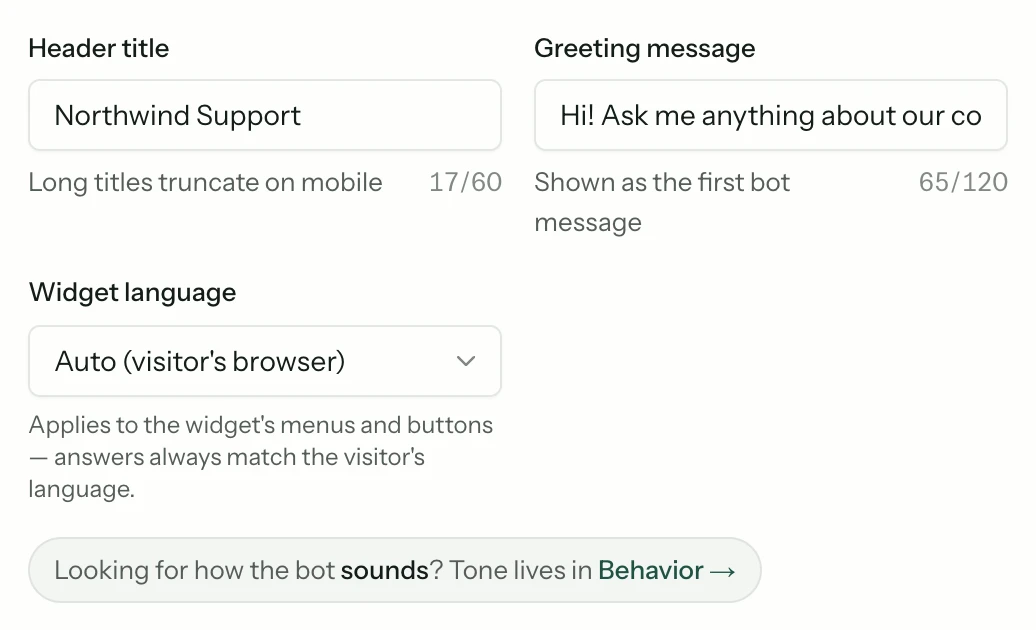
Language is taken from what the visitor wrote rather than from a picker they have to find. That matters because language selectors are consistently ignored, and a visitor writing in Portuguese has already told you what they need. The one setting worth knowing is Widget language under Settings, then Widget, then Voice — and it governs the chrome, not the answers.
Check the refusal behaviour in each language
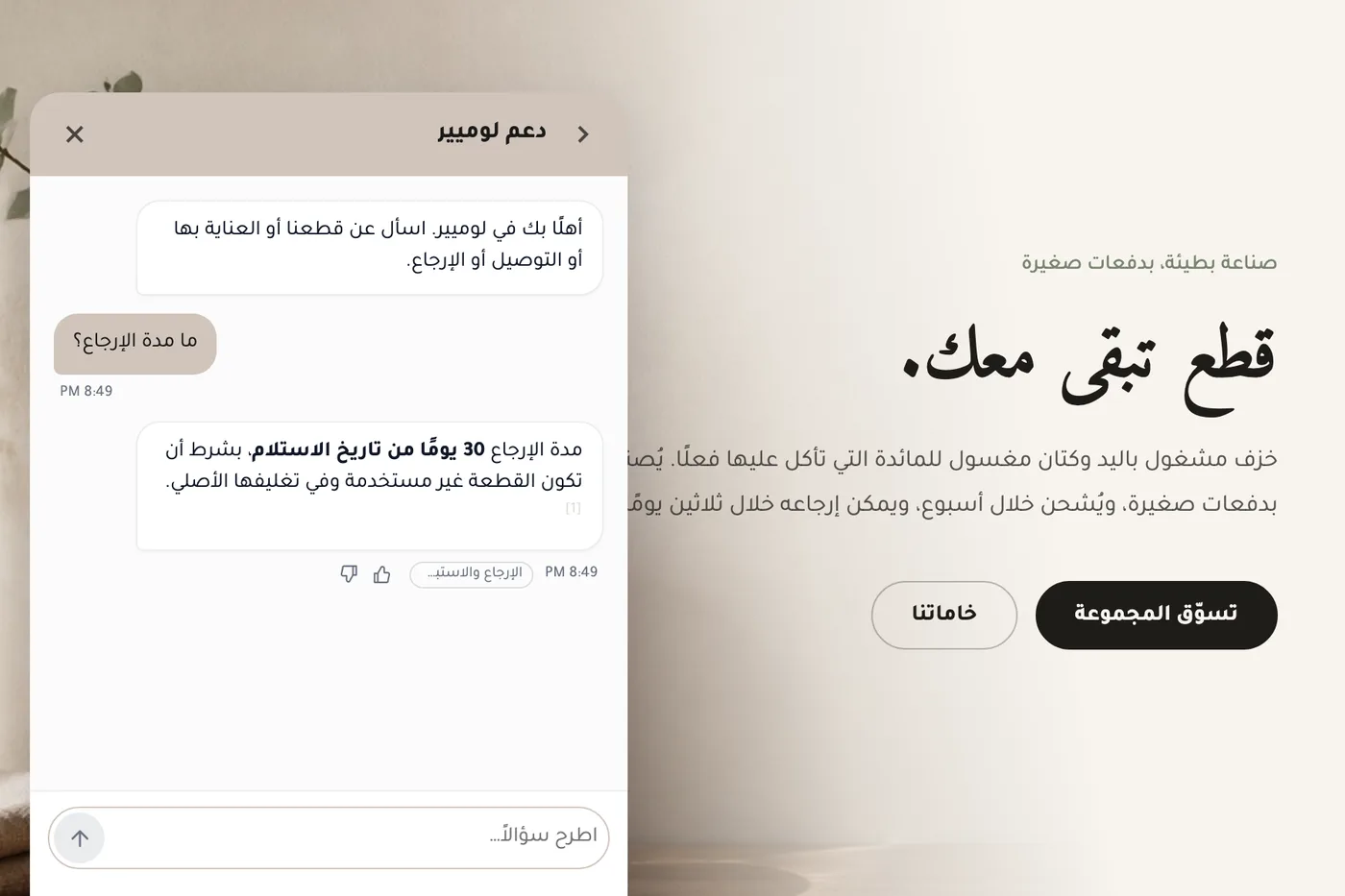
This is the step people skip. Ask a question you know is outside your content, in each language you expect, and confirm you get a refusal rather than a fluent invention. Fabrication is hardest to catch in a language nobody on your team reads.
Test the boundary, not the greeting
A polite hello in French proves nothing.
Have a speaker review samples
Conversations are logged, so this is a periodic review, not live monitoring.
Use volume by language to decide where to localise
Conversations are logged as asked, so you can see which languages generate real demand. That is a much better basis for deciding where to invest in proper localisation than a market forecast.
Common questions
- Do I need to translate my documentation first?
- No. It answers in the language of the question from the content you have. Translating your source improves precision in that language, but it is not a prerequisite.
- How do I check quality in a language I do not read?
- Conversations are logged in full, so sample them with a native speaker periodically. The refusal behaviour is the safety net: because it declines rather than improvises, the failure mode in an unreviewed language is silence rather than confident invention.
- Will citations point to translated pages?
- They point at the source page the answer came from. If you publish and index a translated version, that becomes citable too.
From the blog
All posts- EvaluatingWhat supporting Arabic properly asks of an AI chat widgetWhat correct Arabic support in an AI chat widget involves — right-to-left layout, mixed-direction text, reply language, citations and search — how Matter Chat handles each, where it still falls short, and a live Arabic demo store to test it on.Read
- BuildingLaunch checklist: five questions before you go liveBefore launch: confirm sources, citations, refusals, human handoff, and cost controls. If any fail, the widget is not ready — the model is not the issue.Read
- EvaluatingEvaluating multilingual AI support without a language you speakHow to evaluate multilingual AI support when you cannot read every reply: locked facts, paraphrase pairs, citation checks, and handoff — without trusting the demo language switch.Read



Answer honestly. Capture the rest.
Point Matter Chat at your site and see what it can — and can't — answer. It's honest about both.
No credit card. 2 minute setup.
Every answer cites the source it came from. When there isn't one, it says so — and hands the visitor to you.


Installs on the tools you already run.