Stop answering the same internal question every week
Your handbook is complete, well written, and nobody reads it. They ask in the channel instead, and someone senior answers the same thing for the ninth time.
No credit card. Nothing published.

Priya
how much notice do I need to give for leave?
HandbookApp
Two weeks for up to five days, and a month for anything longer. Your line manager approves it.
Employee handbook — Leave & absence- One answer, every time
- Not nine remembered versions of the same policy.
- Cites the document
- So the reader can open the policy and check the detail.
- Uploads, not just crawls
- Internal material never has to be made public.
- Finds the unwritten
- The processes that exist only in someone's head.

Institutional knowledge lives in interruptions
The answer exists in a document nobody can locate, so it travels by direct message instead. The cost falls on whoever is most helpful, and none of it is written down anywhere new joiners can reach.
- The same policy question appears in the team channel every few weeks
- New joiners ask a colleague rather than search the handbook
- Answers vary depending on who happened to reply
- Your most senior people spend real time on lookup, not judgement
Getting institutional knowledge out of interruptions
Questions that could be looked up get asked in a channel instead, because asking is faster than searching. The people who answer are the ones who can least afford the interruption.
Answers from your handbook
Policies, processes and where-do-I-find-it questions, answered from the documents you already maintain.
A link to the source
Every answer cites the document, so the reader can verify the detail rather than trust a paraphrase.
Nothing published
Uploaded documents are indexed without being put on the public web.
Refuses on the uncertain
A wrong answer about leave or expenses is worse than no answer, so it declines instead of improvising.
Where the team already talks
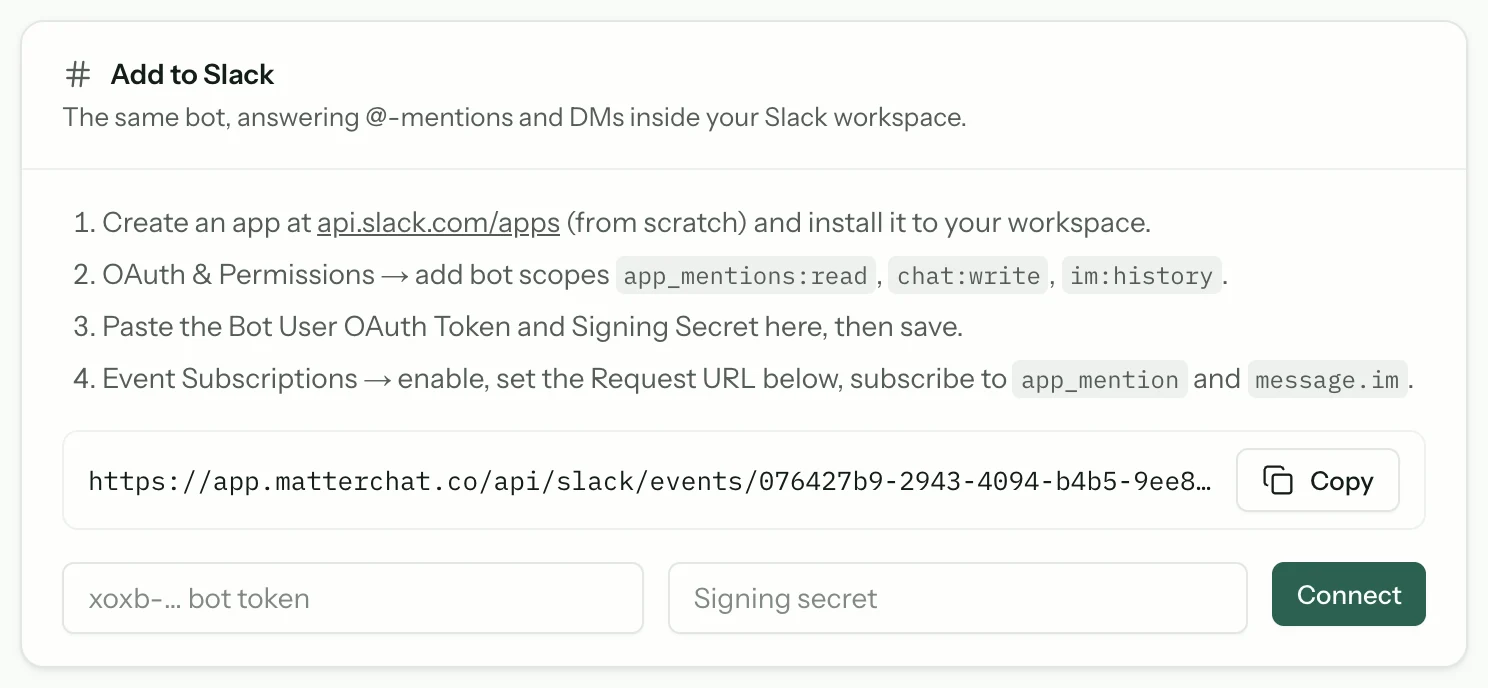
On Growth and above, answers reach Slack rather than a destination nobody remembers to open.
The unwritten list
A ranked report of what your organisation has never actually documented.
One answer, cited, every time
Point it at your internal material and the answer stops depending on who is online. Everyone gets the same reply with the same link to the same source document.
- Consistent across the team
- The reply does not change with who happened to be online when it was asked.
- Cites the document
- Every answer names the file it came from, so a paraphrase can always be checked.
- Uploads, not just crawls
- PDF, Word, Markdown or plain text, indexed straight from the file.
- Refuses rather than improvises
- On anything the documents do not settle, it declines and says so.

Where your team already talks
An internal tool only works if it lives where the question would have been asked. On Growth and above, the bot answers @-mentions and DMs in Slack, so nobody has to go anywhere new to ask.
Find out what the handbook never covered
Applied internally, the gap report is a ranked list of what your organisation has never actually written down — the processes that were only ever explained out loud.
Use a separate bot, not a separate answer
The failure mode here is not a bad answer — it is a good answer given to the wrong person. An internal assistant and a public one should never share an index, because retrieval has no idea who is asking; it only knows what it was allowed to read.
- One bot for the public site, another for internal material
- Uploaded documents are indexed without being published anywhere
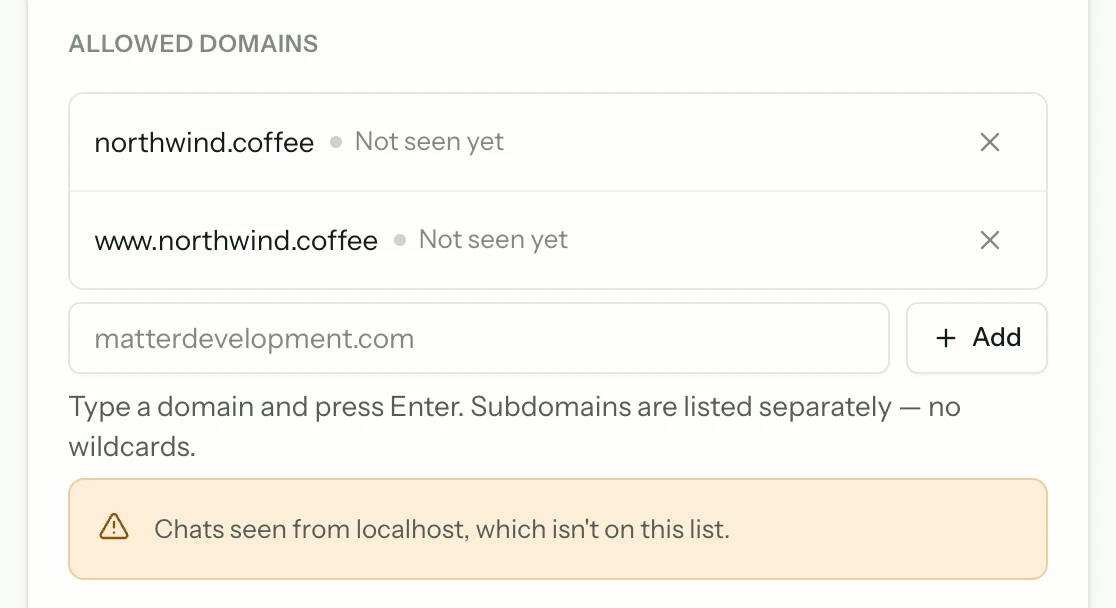
- The domain allow-list decides where it may answer at all
- It declines on the uncertain — wrong policy is worse than no policy
Uploads are snapshots rather than links, so a policy that changes has to be uploaded again. That is the one piece of upkeep this does not remove for you.

Your crawled website
answers on yourcompany.com
Your uploaded handbook
answers on intranet only
Standing one up for a team
The important decision is not technical. It is making sure internal material can only be reached from an internal surface.
- 1
Use a separate bot
Never mix internal documents into the bot serving your public site. Different audience, different knowledge base.
- 2
Upload the handbook
Process docs, policies, the onboarding guide. Uploads are snapshots, so replace them when the document changes.
- 3
Lock it to internal origins
The domain allow-list is what enforces where an internal assistant is allowed to answer at all.
- 4
Write down what it could not answer
The gap report is unusually blunt internally — most teams find two or three load-bearing processes nobody ever wrote up.
What operations people ask
Short answers. If yours is not here, the assistant on this page will try it — and tell you honestly if it cannot.
Can it read documents that are not published on a public site?
Yes. Uploaded documents sit alongside crawled pages, so internal handbooks, process docs, and policy files can be indexed without publishing them anywhere.
Who can see the answers?
Access follows where you deploy it. A bot serving internal material should be placed on an internal surface and domain-locked to it, rather than embedded on your public marketing site.
Does this replace our handbook?
No, it makes it reachable. The handbook stays the source of truth, which is exactly why every answer links back to it rather than restating it from memory.
Keep reading
All solutions



From the blog
All posts- EvaluatingWhy answer rate is a vendor metric, not a buyer metricAnswer rate is trivially improved by being less careful. Here is what the number actually measures — and what to read instead when you evaluate vendors.Read
- EvaluatingWhat supporting Arabic properly asks of an AI chat widgetWhat correct Arabic support in an AI chat widget involves — right-to-left layout, mixed-direction text, reply language, citations and search — how Matter Chat handles each, where it still falls short, and a live Arabic demo store to test it on.Read
- EvaluatingChatbase alternatives for teams that need cited answers (2026)Matter Chat, Chatbase, Intercom Fin, Tidio Lyro, DocsBot and Chatling compared on citations, refusal behaviour, handoff and what the entry price meters. Checked on the vendors' own pages, with the test to run on all six.Read



Answer honestly. Capture the rest.
Point Matter Chat at your site and see what it can — and can't — answer. It's honest about both.
No credit card. 2 minute setup.
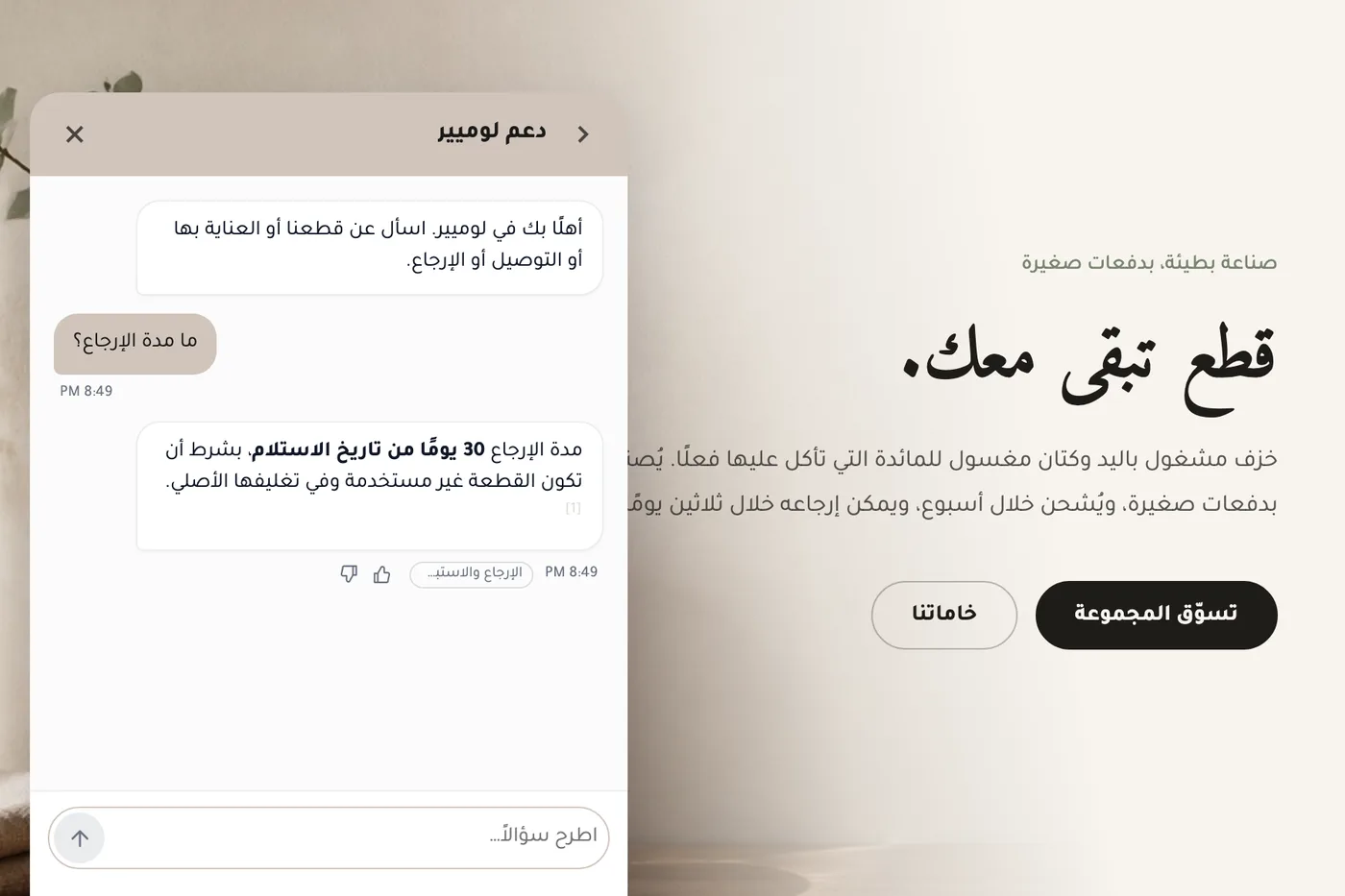
Every answer cites the source it came from. When there isn't one, it says so — and hands the visitor to you.


Installs on the tools you already run.